
Excise duty: what it is, which goods it applies to and who administers it
Excise duty is a collective term for the duties payable on the import, production or sale of selected goods. Here we explain what excise duty is, which categories of goods are affected, who administers them, and how excise duty enters into the calculation of your total import costs.
 By Richard Coster··9 min read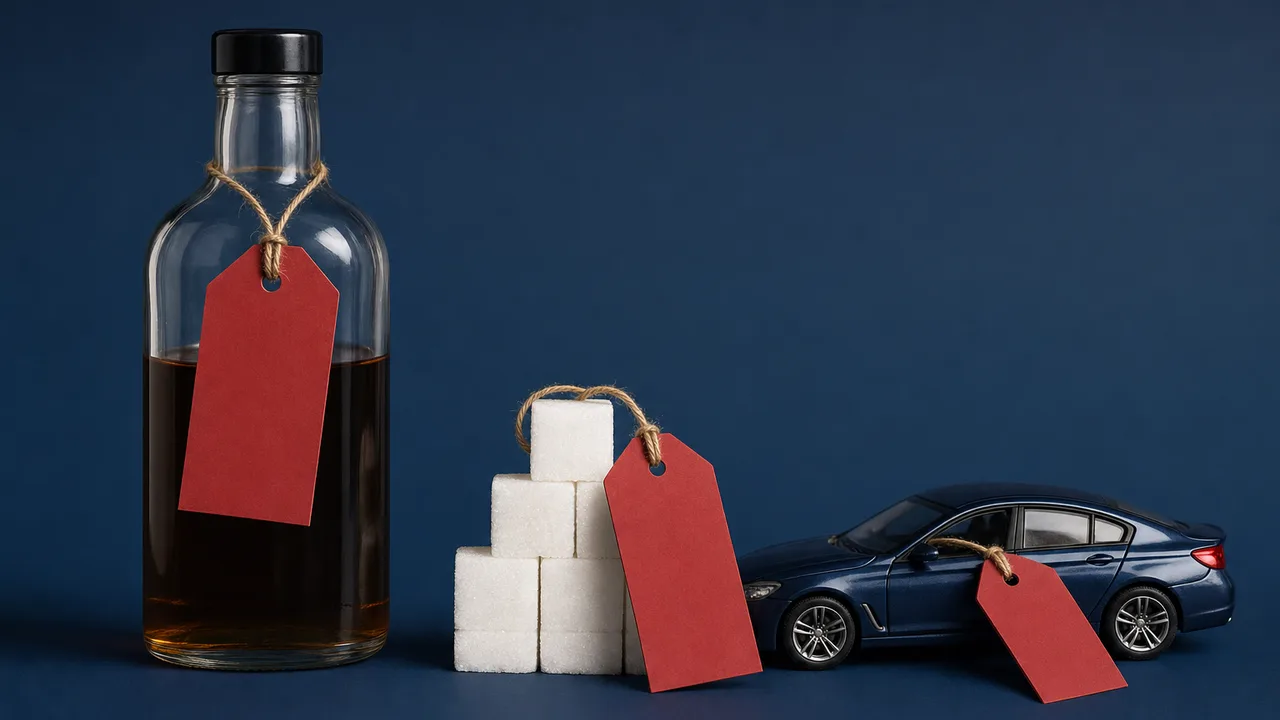
In short
- Excise duty is a collective term for duties on selected goods, not a single duty.
- There is excise duty on alcohol, tobacco, sugar, beverages and vehicles, among other things.
- The Norwegian Tax Administration (Skatteetaten) administers the excise duties; the Norwegian parliament (Stortinget) sets the rates in the national budget.
- Excise duty forms part of the basis for calculating VAT, so you pay VAT on the excise duty too.
- If you hold customs credit, you can charge customs duty and excise duties to the account, but not VAT.
Many businesses importing goods into Norway come across the term excise duty without quite knowing what it covers. Is it the same thing as customs duty? Is it always payable? Who administers it, and how is it calculated? In this guide we answer all of those questions: what excise duty is, which categories of goods are affected, who sets the rates, and how excise duty ties in with customs duty and VAT in a typical import.
If you would first like an overall view of every charge that can arise on import, we recommend the guide What is customs duty? Duty, VAT and excise duty, which is the pillar article for this topic.
What is excise duty?
The Norwegian Tax Administration (Skatteetaten) defines excise duties as duties payable on the import, production or sale of certain types of goods. It is not one single duty but an umbrella term for a range of duties imposed on particular products, often with a health, environmental or distributional policy purpose.
Excise duty differs from the two other charges on import in one important respect:
- Customs duty applies only to one particular class of goods (in practice textiles and foodstuffs) and is determined by the commodity code in the customs tariff. Norwegian Customs (Tolletaten) administers it.
- VAT applies, as a general rule, to all goods (25 % standard, 15 % on foodstuffs). The Norwegian Tax Administration administers it.
- Excise duty applies to selected goods and types of business where the Norwegian parliament (Stortinget) has decided an additional duty is payable. The Norwegian Tax Administration administers them.
Who sets the rates? It is Stortinget, the Norwegian parliament, that sets the rates and decides which goods carry excise duty, normally as part of the national budget each year. The rates can therefore change from one year to the next.
Which goods carry excise duty?
Norwegian Customs lists the most common categories affected in its import guide. According to toll.no, there is excise duty on, among other things:
- Alcoholic beverages (alcohol duty)
- Non-alcoholic beverages
- Sugar (sugar duty)
- Tobacco products (tobacco duty)
- Beverage packaging
- Vehicles, through the one-off registration tax (engangsavgift) on first-time registration
Excise duty may also apply to other goods and businesses. The Norwegian Tax Administration publishes the full list of all current excise duties on its website.
Rates and rules vary. The method of calculation varies from product to product. If you import goods in these categories, you need to familiarise yourself with the rules for that particular excise duty. Always check the current rates with the Norwegian Tax Administration.
One excise duty at a time, not one rule for everything
An important consequence of excise duty being an umbrella term is that you cannot read off a single rate and apply it to every product. The alcohol duty has its own rules and rates, the tobacco duty has its own, and the one-off registration tax on vehicles is calculated from the vehicle's technical characteristics such as CO₂ emissions, engine power and kerb weight. You therefore need to know the category of the goods you are importing in order to know which excise duty is relevant.

Who administers the excise duties?
One point that can cause confusion for importers: Norwegian Customs and the Norwegian Tax Administration share responsibility for the charges on import.
- Norwegian Customs administers the customs duty and handles border control. It is Norwegian Customs that receives the declaration and checks the goods as they cross the border.
- The Norwegian Tax Administration is responsible for administering excise duties and import VAT. Responsibility for the excise duties was transferred to the Norwegian Tax Administration in 2016.
In practice this means that you deal with Norwegian Customs for the declaration itself, while it is the Norwegian Tax Administration that administers the rules for the excise duties you have to pay. If you want to understand the role of Norwegian Customs and its requirements at the border crossing, we have a separate guide to Norwegian Customs: role and requirements.
How excise duty enters into the total import bill
To understand what excise duty costs in practice, you need to understand the order of calculation on import. According to Norwegian Customs, the basis for VAT is calculated as follows:
Customs value
What you have paid or are to pay for the goods, including freight, insurance and packaging to Norway.
+ Customs duty
Applies only to goods that carry customs duty (in practice textiles and foodstuffs). Calculated on the customs value.
+ Excise duty
Applies to goods in the affected categories. Added to the customs value and the customs duty.
= Basis for VAT
VAT (25 %, or 15 % on foodstuffs) is calculated on the sum of customs value, customs duty and excise duty.
That means you also pay VAT on the excise duty amount. If you import alcohol, for example, the alcohol duty is added to the calculation basis, and VAT is then calculated on the combined amount. This is a detail many people overlook, and it can make the total cost higher than expected.
Remember the customs value as the basis. The customs value is the foundation of the entire duty calculation. An incorrect customs value, for instance if you forget the freight costs, will give the wrong calculation basis for customs duty, excise duty and VAT alike. We explain the customs value in detail in the guide on what customs duty is.
The one-off registration tax: excise duty on imported vehicles
If you import a vehicle into Norway, the one-off registration tax is the excise duty that applies. It is payable on first-time registration of the vehicle in Norway, and is calculated on the basis of, among other things:
- CO₂ emissions
- Engine power
- Kerb weight
The Norwegian Tax Administration offers a calculator for working out the duties on importing and registering a vehicle. Because the one-off registration tax can amount to a considerable sum, particularly for cars with high emissions, it is important to calculate it carefully in advance.
Customs credit and excise duties
If your business has been granted customs credit by the Norwegian Tax Administration, you can charge customs duties and excise duties to the customs credit account instead of paying on each individual import. This gives better cash-flow control if you import excisable goods frequently.
Note that VAT is not covered by the customs credit. It is reported separately by you, as a VAT-registered business, in the tax return to the Norwegian Tax Administration. We explain the customs credit scheme in more detail in the guide on customs credit for businesses.
Duty relief and excise duty
A point many people overlook: duty relief exempts you only from the customs duty itself, not from excise duties. If you import goods that are free of customs duty, for example because they are covered by a free trade agreement, excise duty and VAT may still apply. Free trade agreements do not cover excise duties. Read more about what duty relief actually covers in the guide on duty relief and duty-free goods for businesses.
How we help you with excise duties
Keeping track of which excise duties apply to your particular goods, what the rate is and how it affects the total import bill is time-consuming. As a digital customs broker we do it for you:
- We establish whether your goods are subject to excise duty
- We make sure the correct rate and calculation basis are used
- We declare the goods and report the duties correctly
Not sure whether your goods carry excise duty?
Send us the invoice and the transport document, and we will check whether the goods are subject to excise duty and what the total import bill comes to. Contact us for a quote.
Get help with the duty calculation →Sources: Skatteetaten: Særavgifter (excise duties), Tolletaten: Importguide (import guide) and Tolletaten: Beregning av tollavgift og andre avgifter (calculation of customs duty and other charges). Rates are set by Stortinget; always check the current rates with the Norwegian Tax Administration.
Frequently asked questions
What is excise duty?▾
Which goods carry excise duty in Norway?▾
Who administers the excise duties?▾
How does excise duty enter into the calculation of total import costs?▾
Can I use customs credit to pay excise duties?▾
What is the one-off registration tax, and is it an excise duty?▾
How can a customs broker help with excise duties?▾
Related articles

Customs credit for businesses
Customs credit is the scheme that lets your business defer payment of customs duty, import VAT and excise duties instead of paying on every single import. Here we explain what customs credit is, how a business applies to the Norwegian Tax Administration (Skatteetaten), which conditions and security requirements apply, what the scheme costs, and how deferred payment frees up cash in an import business.
What is customs duty? Duty, VAT and excise duty
The Norwegian word toll covers both customs clearance at the border and the customs duty on the goods themselves. Here we explain what customs duty is, the difference between customs duty, VAT and excise duty, which goods actually carry duty, and who sets and administers the various charges.
Duty relief and duty-free goods for businesses
Most goods are already free of customs duty when imported into Norway, and for the goods that do carry duty there are several lawful schemes giving duty relief or a reduced rate. Here we explain the difference between duty-free and duty relief, when goods are duty-free, and which schemes (free trade agreements, temporary importation, commercial samples, re-exportation and more) your business can use to save on customs duty.

Norwegian Customs: role and requirements
Norwegian Customs (Tolletaten) is the state authority for the movement of goods into and out of Norway. Here we explain what Norwegian Customs is and does, the agency's role and tasks — border control, movement of goods and collection — the difference between Norwegian Customs and the Norwegian Tax Administration after excise duties and import VAT were moved, and what the agency requires of you if you import and export.