
Duty relief and duty-free goods for businesses
Most goods are already free of customs duty when imported into Norway, and for the goods that do carry duty there are several lawful schemes giving duty relief or a reduced rate. Here we explain the difference between duty-free and duty relief, when goods are duty-free, and which schemes (free trade agreements, temporary importation, commercial samples, re-exportation and more) your business can use to save on customs duty.
 By Richard Coster··11 min read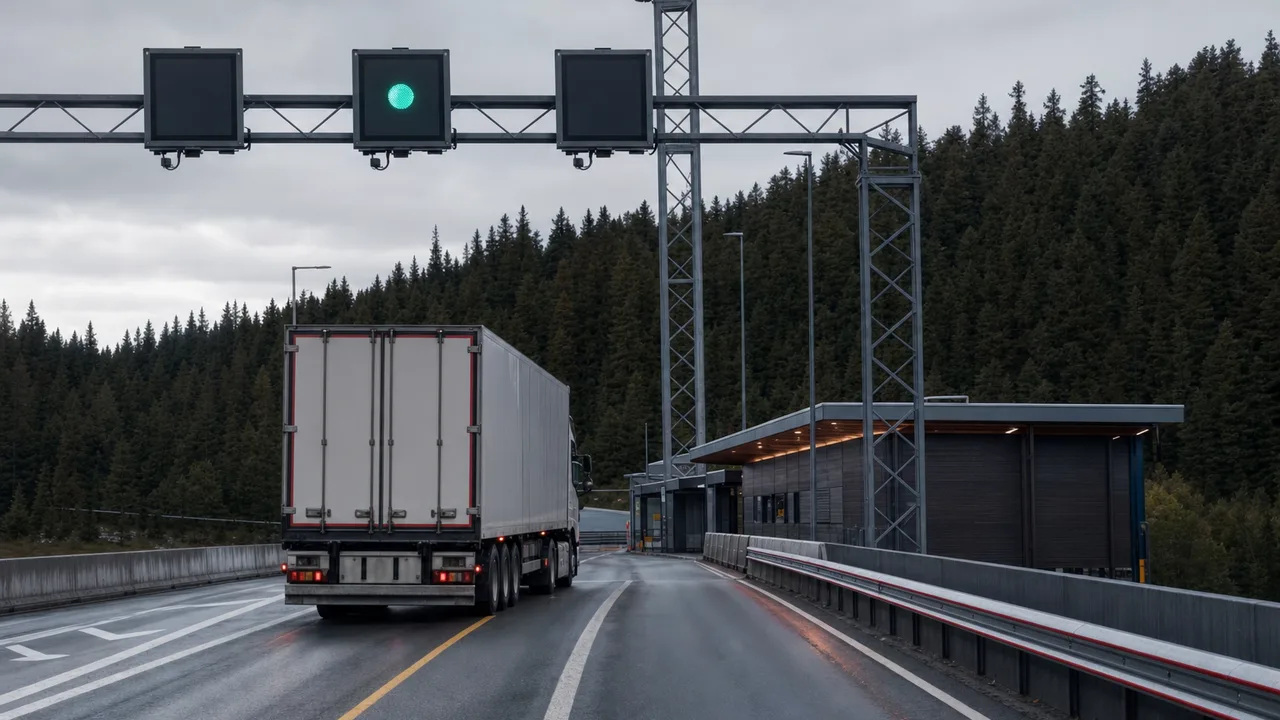
In short
- Most goods are already free of customs duty when imported into Norway: in practice, duty applies only to foodstuffs and textiles.
- Duty-free describes goods with no customs duty; duty relief means the formal exemption schemes in the customs legislation.
- Free trade agreements give relief from duty or a reduced rate, but you have to document origin and actively claim preference at customs clearance.
- Temporary importation, commercial samples and ATA carnets let goods that are going out again pass without customs duty.
- Duty-free does not mean tax-free: as a general rule you still have to pay or report VAT.
For a business trading across the border, customs duty is a cost you can often do something about. What many do not know is that most goods are already free of customs duty when imported into Norway, and that for the goods that actually do carry duty there is a range of lawful schemes giving duty relief or a reduced rate. In this guide we look at how a business can avoid or reduce customs duty lawfully: the difference between duty-free and duty relief, when goods are duty-free, and which schemes (free trade agreements, temporary importation, commercial samples, re-exportation and more) you can put to use. If you want the basic concepts in place first, we have a separate guide to what customs duty is.
Duty-free or duty relief: what is the difference?
The terms are used interchangeably in everyday speech, but it is worth keeping them apart:
- Duty-free / free of customs duty describes goods on which no customs duty is payable. That may be because the goods carry a zero rate in the customs tariff, or because they obtain relief through, for example, a free trade agreement.
- Duty relief, or customs exemption, means the formal exemption schemes in the customs legislation: particular goods and purposes that are exempt from customs duty subject to further conditions.
For the business the point is the same either way: the aim is to avoid or reduce the customs duty lawfully. Through the rest of this guide we use “duty relief” as an umbrella term for the different ways you can get there.
Duty-free does not mean tax-free. That goods are free of customs duty only means that the customs duty itself is zero. As a general rule you still have to pay or report VAT on importation, and some goods also trigger excise duty; free trade agreements do not apply to excise duties. “No duty” is therefore not the same thing as “no taxes”.
When are goods duty-free in Norway?
Here the reality surprises many: the vast majority of goods are already free of customs duty when imported into Norway. Put simply, in practice there is customs duty only on foodstuffs (food and drink) and textiles. Industrial goods such as electronics, machinery, tools, furniture and spare parts normally carry no customs duty.
Part of the background lies in the EEA Agreement (EØS-avtalen). Under the EEA it is duty-free to import goods falling within chapters 25 to 97 of the customs tariff, which in practice means most industrial goods and processed agricultural goods, while goods in chapters 1 to 24 are not covered in the same way, with certain exceptions laid down in the protocols to the agreement. How much duty a specific product carries is always decided by how it is classified, and you find the rate by looking up the commodity code in the customs tariff.
That is exactly why correct classification is the first and most important step. If the commodity code is wrong, you can end up paying duty on goods that are in fact duty-free, or the other way round. If you want to dig into how classification governs customs treatment, we go through it in our guide to Norwegian Customs (Tolletaten) as the administrator of the customs tariff and the customs duty.
Check the commodity code before you draw any conclusion. “Most goods are duty-free” is a general rule, not a guarantee. The only reliable way to know whether your particular goods carry duty is to look up the correct commodity code in the customs tariff, and if you are in doubt, you can ask Norwegian Customs for a binding classification ruling (bindende klassifiseringsuttalelse).
Which schemes give duty relief or reduced customs duty?
Even where goods carry customs duty to begin with, there are several lawful schemes that can lower the duty or remove it. Here are the most important ones a business should know about:
- Preferential duty under free trade agreements: relief from duty or a reduced rate when the goods originate in a partner country.
- Temporary importation: free of duty and taxes for goods that are to leave the country again.
- Commercial samples: no customs duty or VAT on samples of negligible value.
- ATA carnet: an international customs document for temporary import and export.
- Refund on re-exportation (drawback): repayment of customs duty when the goods are later taken out again.
- Duty relief for particular goods and purposes: separate exemptions in the customs legislation, including for inherited goods, ship's stores and goods for scientific use.
We go through them below.
Free trade agreements and preferential duty
The scheme that most businesses benefit from is preferential duty. If you import from a country with which Norway or EFTA has a free trade agreement, the duty can be reduced or fall away altogether. But it does not happen automatically: two conditions must be met.
- The goods must originate in the partner country under the agreement's rules of origin, and the origin must be documented with a valid proof of origin.
- You must actively claim preference at customs clearance. If you do not, you pay the ordinary rate of duty, even though the goods qualify.
It is also worth noting that a free trade agreement does not cover all goods. Product coverage varies from agreement to agreement, so you have to check the specific agreement to see whether your particular goods can obtain preference. This is a field where the details decide the outcome, so it pays to work through the conditions in the individual agreement before you count on relief.
Preference has to be claimed; it does not arrive on its own. Many businesses pay duty they could have avoided, simply because the claim for preference was not made at customs clearance or because the proof of origin was missing. Having the right documentation in place beforehand is often the difference between the full rate and zero duty.
Temporary importation and re-exportation
If the goods are only going to be in Norway for a short period before being taken out again, temporary importation can give relief from customs duty and taxes. The scheme is relevant for exhibition goods, professional equipment, machinery for a time-limited assignment and goods for repair, among other things. Norwegian Customs can grant a deadline of up to one year for re-exportation of goods that have been imported temporarily.
The deadline is the critical point here: if you do not take the goods out within it, you risk having to pay customs duty and taxes, and being subject to a sanction for missing the deadline. If you nevertheless want to keep the goods in Norway, you can, within the deadline, choose to convert the temporary importation into an ordinary importation and pay customs duty and taxes in the normal way.
Commercial samples and ATA carnets
A practical rule applies to commercial samples: as a general rule, no customs duty or VAT is to be calculated on the importation of samples of negligible value that are imported with a view to the later importation of similar goods.
If, on the other hand, you are travelling with equipment or samples of greater value that are to leave the country again, an ATA carnet is a useful tool. It is an international customs document that simplifies the temporary import and export of goods that are not to be sold, typically goods for trade fairs and exhibitions, professional and production equipment, scientific instruments and commercial samples. The carnet replaces the ordinary customs documents and lets the goods pass without customs duty and taxes being calculated, on condition that everything is re-imported or re-exported. ATA carnets are issued by the chambers of commerce.
Refund on re-exportation and duty relief for special purposes
There are also schemes for the refund of customs duty (drawback): duty that has been paid on importation can, subject to further conditions, be repaid when the goods are later taken out of the country again. In addition, the customs legislation has a chapter of its own on duty relief for particular goods and purposes, covering among other things inherited goods, stores and consumable supplies for vessels, and goods for scientific use and education at universities and university colleges, the latter partly under a UNESCO convention by which Norway is bound. The conditions vary from one relief to another, so it is important to check the individual scheme before importation.
How your business avoids paying more customs duty than necessary
What all these options have in common is that they place demands on documentation and that they have to be handled correctly at customs clearance. The most common reasons why a business pays too much customs duty are easy to point to:
- The wrong commodity code: the goods are classified in a way that gives them duty they should never have had.
- Forgotten preference: the free trade agreement gives relief from duty, but the claim for preference was never made.
- Missing proof of origin: the goods qualify, but the documentation is not in place at customs clearance.
- An overlooked scheme: temporary importation or the rule on commercial samples could have been used, but the goods were cleared in the ordinary way.
If you discover after the event that a declaration was wrong, for example that you paid duty you could have avoided, the declaration can be corrected through an amending declaration. But the simplest thing is to get it right from the start. Sound cash-flow management belongs here too: if the business needs to defer the actual payment of customs duty and taxes, customs credit for businesses may be relevant, even though it is a different mechanism from duty relief.
How we help you with duty relief
Many businesses pay more customs duty than they have to, not because the rules leave no room for relief, but because the opportunities are not put to use at customs clearance. As a digital customs broker, we make sure the business gets the reliefs it is entitled to:
- we find the correct commodity code, so you do not pay duty on goods that are in fact duty-free
- we assess whether the goods qualify for preferential duty, and make the claim for preference at customs clearance
- we use temporary importation, the rules on commercial samples and ATA carnets where they fit
- we declare electronically and make sure the documentation is in place beforehand
That way you do not have to keep track of free trade agreements, rules of origin and relief schemes yourself. If you need to understand the basis for what actually has to be paid first, you can read our guide to customs duty, VAT and excise duty.
Is your business paying more customs duty than necessary?
Send us the invoice and the transport document, and we will find the correct commodity code and check which duty reliefs and preference schemes your goods can benefit from. Contact us for a quote.
Get help with your customs duty →Sources: Norwegian Customs (Tolletaten) — Tollfrihet eller redusert tollavgift and Norwegian Customs — Midlertidig import til Norge. Rules, conditions, deadlines and rates can change; always check the current information with Norwegian Customs before you clear goods through customs.
Frequently asked questions
What is the difference between duty-free and duty relief?▾
Are most goods duty-free when imported into Norway?▾
How can a business obtain duty relief through a free trade agreement?▾
What is temporary importation, and when does it give duty relief?▾
Do I have to pay customs duty on commercial samples?▾
What is an ATA carnet?▾
Are there separate duty reliefs for particular goods and purposes?▾
Can I get back customs duty I have already paid?▾
Related articles
Customs credit for businesses
Customs credit is the scheme that lets your business defer payment of customs duty, import VAT and excise duties instead of paying on every single import. Here we explain what customs credit is, how a business applies to the Norwegian Tax Administration (Skatteetaten), which conditions and security requirements apply, what the scheme costs, and how deferred payment frees up cash in an import business.

What is customs duty? Duty, VAT and excise duty
The Norwegian word toll covers both customs clearance at the border and the customs duty on the goods themselves. Here we explain what customs duty is, the difference between customs duty, VAT and excise duty, which goods actually carry duty, and who sets and administers the various charges.
Excise duty: what it is, which goods it applies to and who administers it
Excise duty is a collective term for the duties payable on the import, production or sale of selected goods. Here we explain what excise duty is, which categories of goods are affected, who administers them, and how excise duty enters into the calculation of your total import costs.

Norwegian Customs: role and requirements
Norwegian Customs (Tolletaten) is the state authority for the movement of goods into and out of Norway. Here we explain what Norwegian Customs is and does, the agency's role and tasks — border control, movement of goods and collection — the difference between Norwegian Customs and the Norwegian Tax Administration after excise duties and import VAT were moved, and what the agency requires of you if you import and export.